
Beyond Indica & Sativa
Rethinking Cannabis Labels.
Why Does One "Indica" Feel So Different From Another?
Have you ever picked up two cannabis products—both labeled Indica—only to discover that they felt nothing alike?
Maybe one melted you into the couch, while the other left you feeling alert and nostalgic, like something from back in the day. And you're left wondering... How can they both be Indica?
Turns out, there’s a good reason for the disconnect.
Putting the Labels to the Test
The Strain Data Project™ wanted to dig deeper into the traditional classifications of Sativa, Indica, and Hybrid, and compare them to the terpene-based system the project developed: the Strain Compass™, which maps products into SIX color-coded categories based on chemical composition.
SDP analyzed 2,149 observations across 151 strains, tagging each product with both its cultural classification (Sativa/Indica/Hybrid) and its Strain Compass™ category (Orange, Yellow, Green, Blue, Purple, Red).
Then, SDP ran a Chi-Squared Test to determine whether there was a statistically significant relationship between these two systems.
Spoiler: There was.
SDP rejected the null hypothesis with confidence, confirming that the terpene-based categories meaningfully correlate with the traditional labels—but also reveal deeper layers of nuance that the original terms miss entirely. WHAT WAS FOUND.
Orange strains were classified as Sativa nearly three times more often than expected under random assignment. These products tend to have names like Dutch, Haze, and Jack.
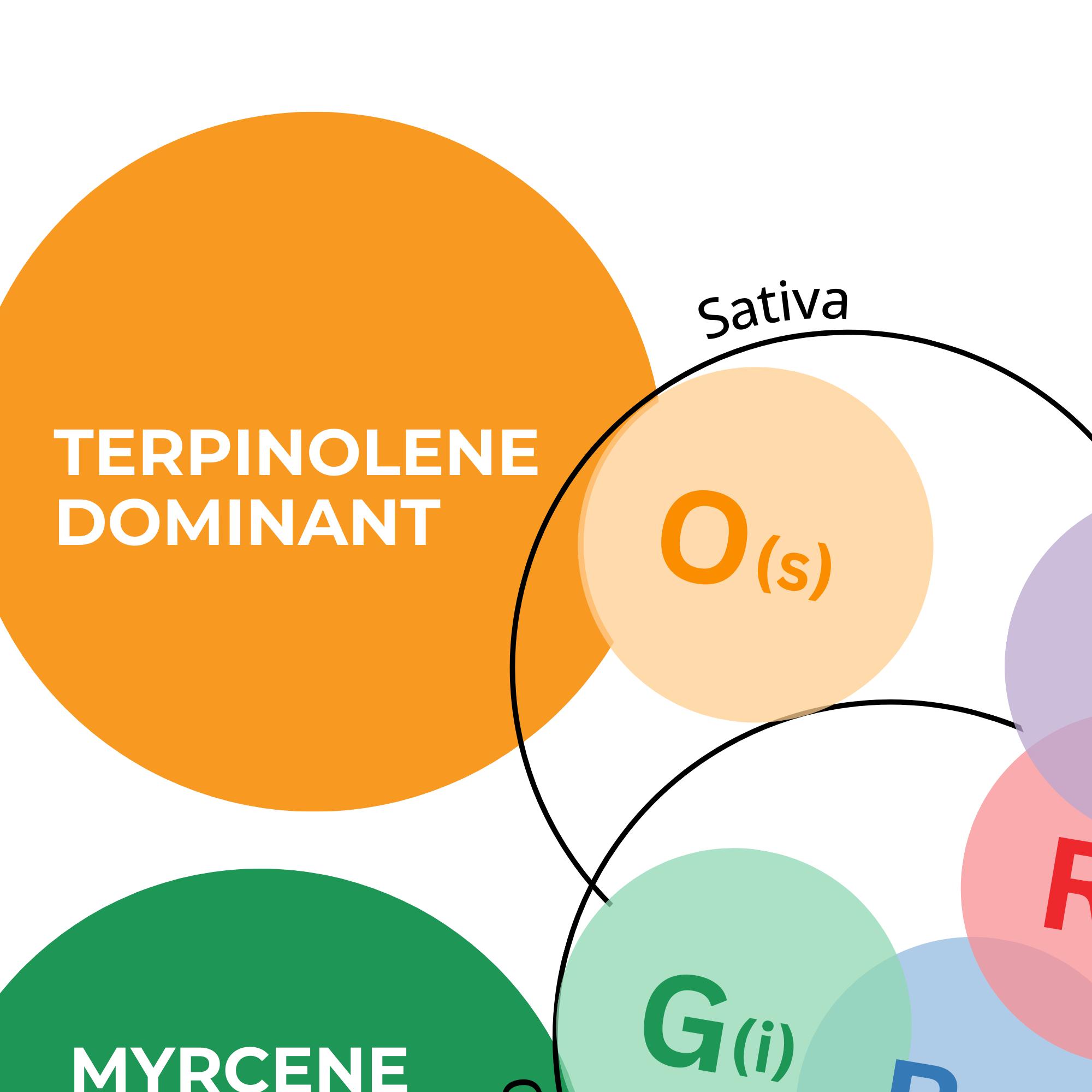
Yellow and Green strains were 30% more likely to be considered Indica—but not in the same way.
- Green & Blue Indicas: These strains give throwback vibes—what many users described as the "college weed" experience. They're often labeled Dream, Urkle, or Blueberries.
- Yellow & Purple Indicas: These, on the other hand, are what you’ll typically find in today’s retail stores—Kush, OG, Cake. Heavier, more modern Indicas often correlated with deep physical relaxation and sleep-ready effects.
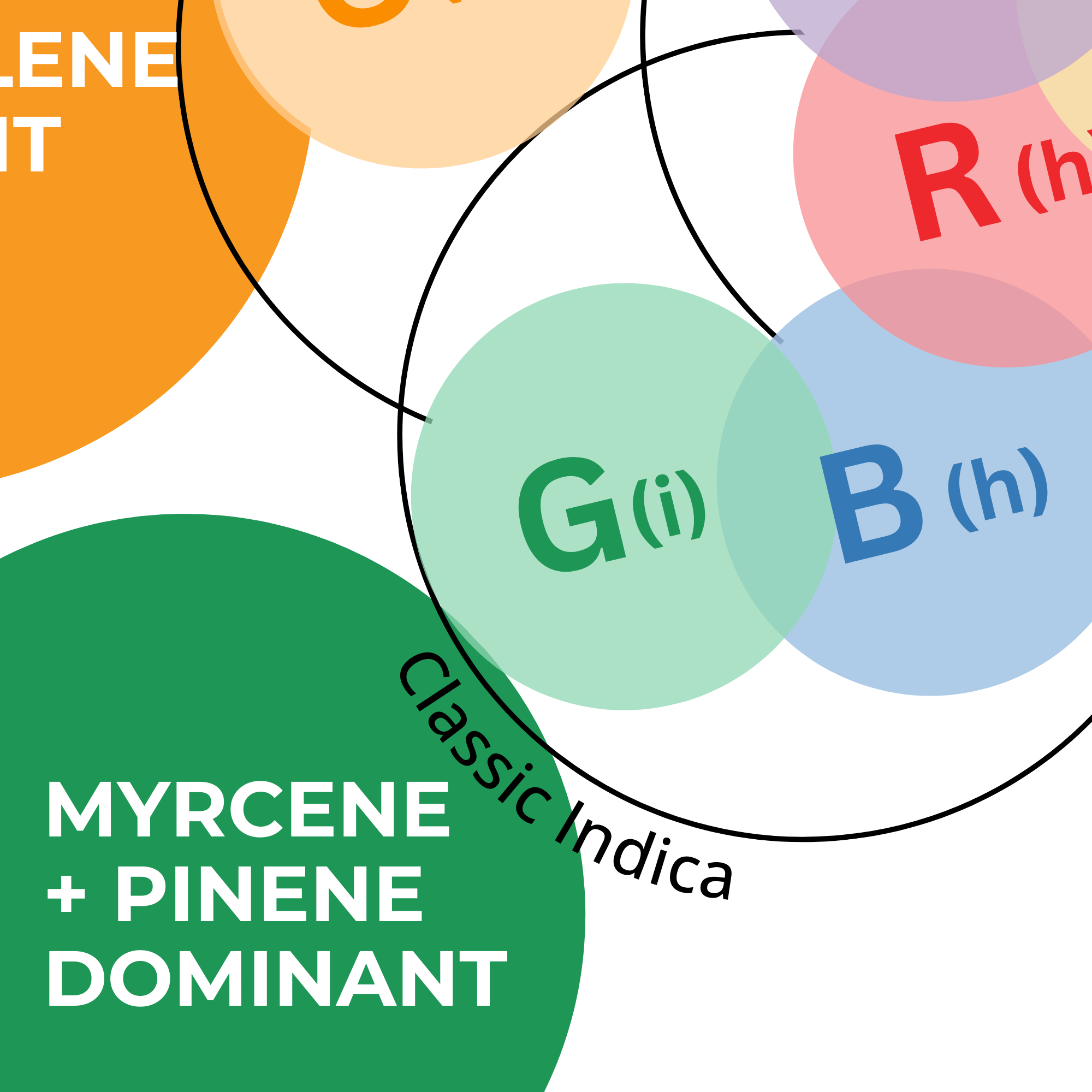

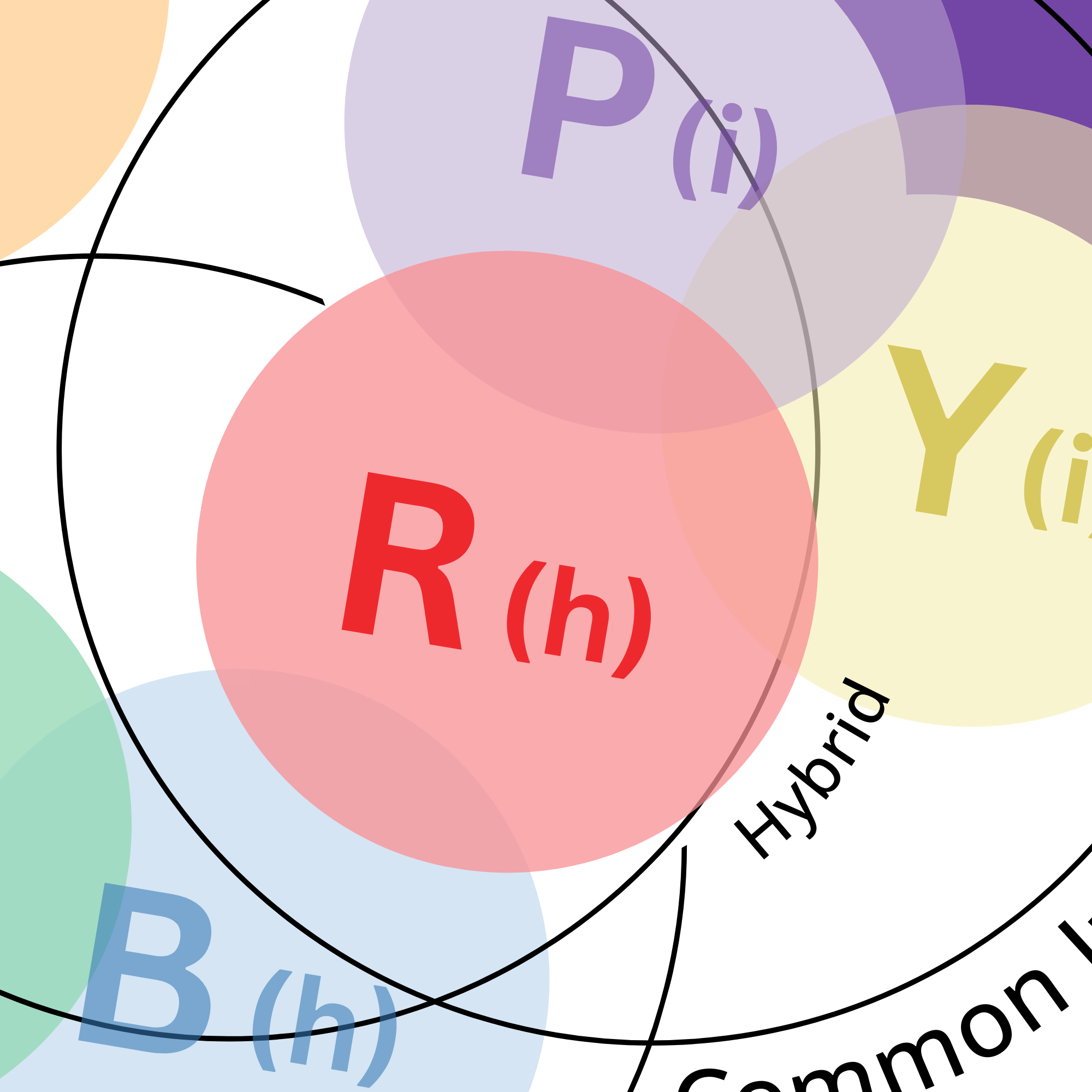
Red strains were 40% more likely to be considered Hybrid. Think balanced, versatile strains like Runtz or Gelato.
From Data to Real Experience
SDP doesn't stop at the numbers. It is constantly evoloving.
The project is continuously gathering qualitative data—stories, feelings, first-hand experiences—and are noticing clear emotional distinctions between strain types. People feel the difference, even when labels don’t explain it.
That’s where SDP's Silhouette Analysis and Venn Diagram visualization come in, showing the overlap—and the gaps—between traditional categories and SDP's terpene-based system. It helps map the why behind all those confusing experiences.
Do you have an experience you want to share? Please email us and let us know if the research of The Strain Data Project™ aligns with your experience.
The Bottom Line
The labels Sativa, Indica, and Hybrid are helpful—but incomplete.
SDP research shows that two products labeled the same can feel dramatically different, and that difference often aligns with the true chemical profile—something the Strain Compass™ is built to decode.
So the next time you’re picking between two "Indicas"… know that the color might just tell you more than the name ever could.